Fashion Business Plan
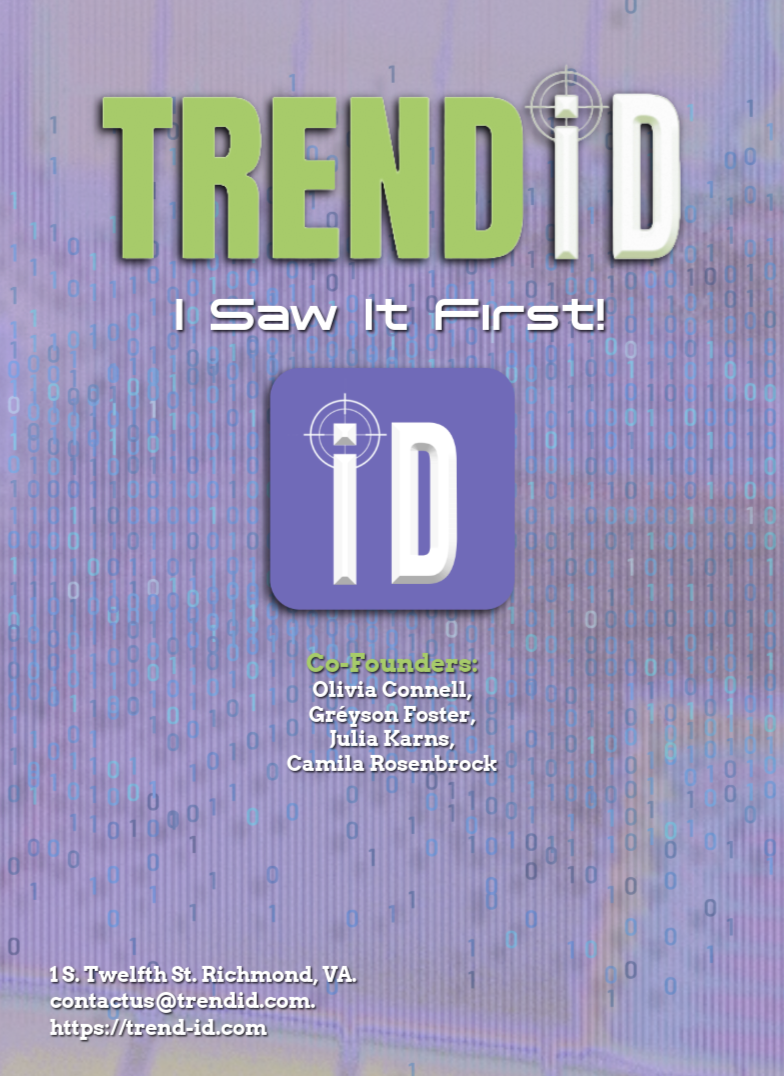
Trend-id: Crowd Sourcing trend data
The Ask:
Over the course of a semester, work with a small group to develop a business plan for a fashion-related company.
Julia Karns www.linkedin.com/in/julia-karns
The group

Camila Rosenbrock www.linkedin.com/in/camilarosenbrock
A Note On Team Dynamics:
I was incredibly proud of this team’s ability to collaborate. Everyone did their part on time and thoroughly, deeply thinking about the project concept and how we could each contribute to create the best plan. I worked with Gréyson on branding, marketing plans, industry and customer research, and sales strategies while Camila and Olivia piloted financials. This assignment was no small task, so I was grateful to have such a reliable and thoughtful team.

Olivia Connell www.linkedin.com/in/olivia-connell
Gréyson Foster www.linkedin.com/in/gréyson-foster

The Concept & Where it came from
Trend-iD is a crowd-sourced fashion forecasting app that empowers users to capture and share real-time fashion observations.
The app transforms everyday observations into valuable trend data, creating a living map of local fashion movements. Users document what people are wearing in their cities, celebrating individuality while exploring how style evolves in real time.
Blending community engagement with data analytics, Trend-iD generates authentic, ground-sourced trend insights. After the first year, this data will be offered to fashion businesses and designers seeking real-time insights for creative and strategic decisions. Trend-iD redefines fashion discovery—one street, one style, one observation at a time.
The concept for our company began when I was inspired to blend my background in environmental science with my love for trend forecasting. After excitedly pitching the idea to my professor and project group, everyone quickly got on board — motivated by the chance to explore something completely new to us. In high school, I had interned with an environmental organization where I was introduced to iNaturalist, a platform that allows both ecologists and everyday observers to document sightings of flora and fauna to track biodiversity. I started to wonder what it would look like to apply that same community-driven, data-collection model to fashion trends, and that question eventually sparked the creation of Trend-iD in September 2025.
The Process .𖥔 ݁ ˖
The Process .𖥔 ݁ ˖
The Challenge:
Due to the unique nature of our business concept, we needed to tweak a large amount of our planning and financial documents to suit it. Additionally, app design was something neither me nor any of my group members were familiar with, however over the course of 2 months and 70 pages exploring the industry we were able to develop a thorough, well-researched business plan for our trend-tracking app.
Our Starting Point:
After developing our initial concept, we immediately wrote a mission statement that would guide the creation of our business by grounding us in shared beliefs:
“To inspire curiosity, creativity, and connection by fostering A unique platform for sharing and exploring fashion trend sightings.”
We also chose 3 keywords to represent the company essence:
Knowledge
community
self-expression
Defining the Audience & brand
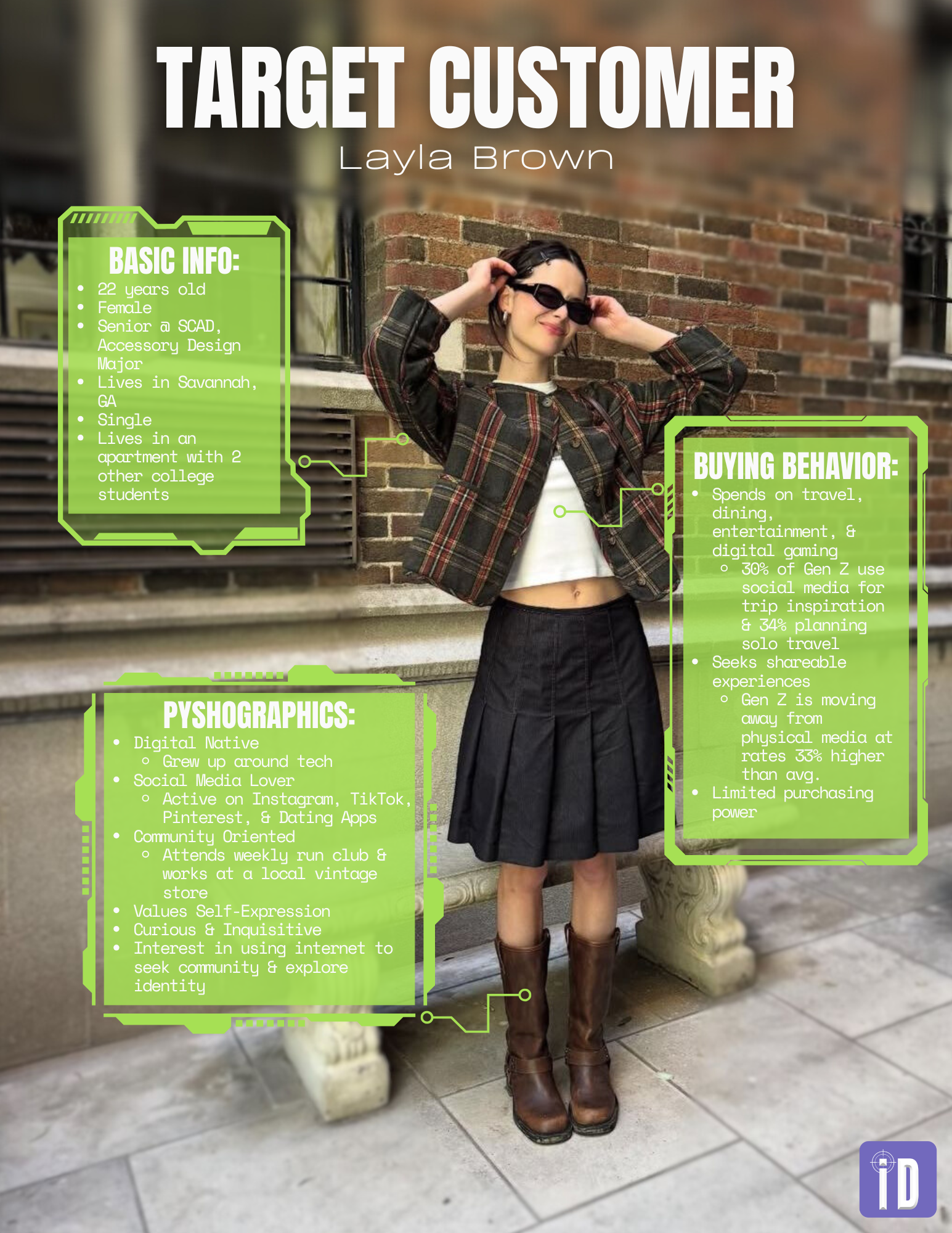
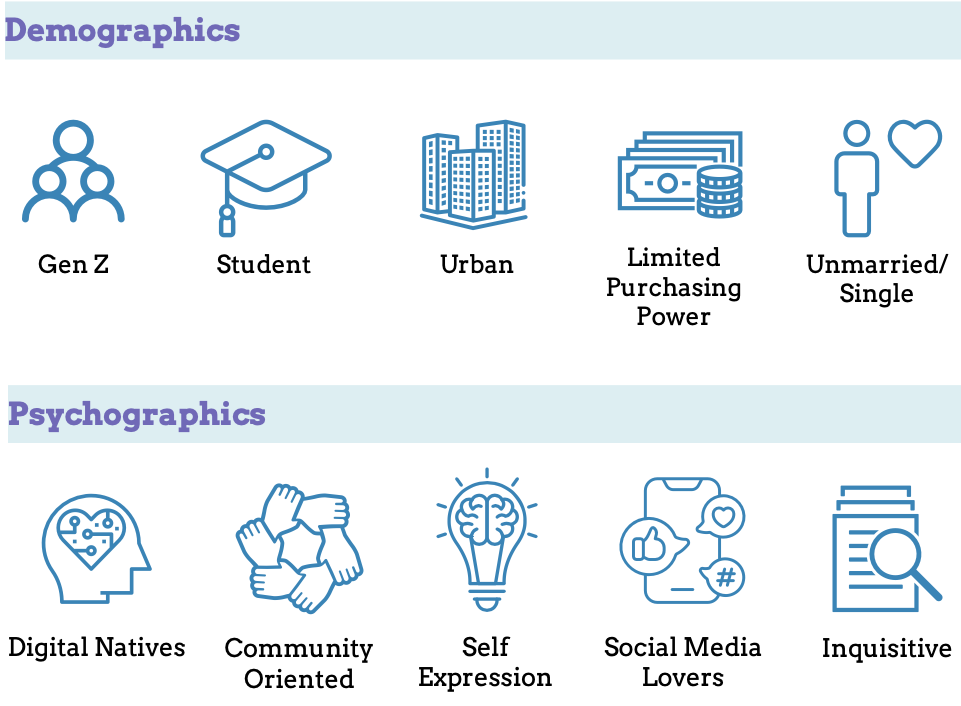
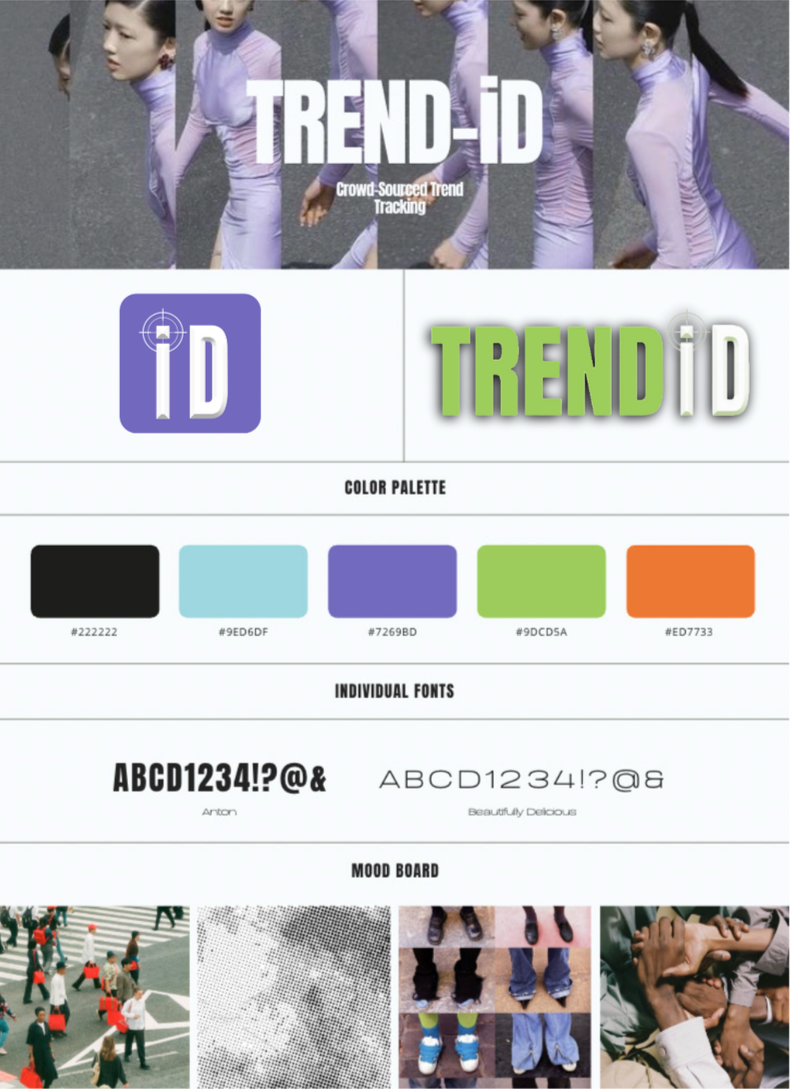
Our visual identity reflects the dynamic, tech-forward nature of crowd-sourced fashion discovery. The "TREND-iD" wordmark balances bold authority with accessibility.
Color Palette: Our vibrant palette balances energy with trust. Bright tones convey real-time trend excitement, while cooler hues add credibility. Near-black grounds the brand professionally.
Typography: Anton delivers bold headers that command attention like street style—unapologetic and impossible to ignore. Beautifully Delicious makes trend data feel personal and accessible.
Proving the market
Statistically speaking, the data analytics industry (especially within fashion) is growing exponentially. According to Grand View Research, the market sector is currently valued at an estimated $69.54 billion, and is projected to reach $302.01 billion by 2030.
This however does not prove that our target market will buy in. In order to validate our target market's interest in this business offering, we conducted a survey of 31 Gen Z students from across the United States.
We found that while more than half of responders said they are interested knowing what is trending in their area, 76.7% of responders said that they would be interested in an app where they could view trends that others spotted and upload their own observations. This emphasizes the added value that our app offers by creating a community around local trends.
Developing the Marketing Plan
Based on our mass-market positioning and Gen Z target market, I created marketing campaigns that encourage community engagement, social media discourse, and a bit of friendly competition via gamification.
Below is just a taste of what I had planned for pre-opening & year 1 marketing efforts!
-
Street Interviews
Halloween Depop Collab
RushTok: Sorority Partnerships
Graduation Trend Coverage
-
Spotify Ads: Cyber Monday & Back To School Deal Promo
Content Creator Collabs: “Pack with me for Spring break based on these trends!”
-
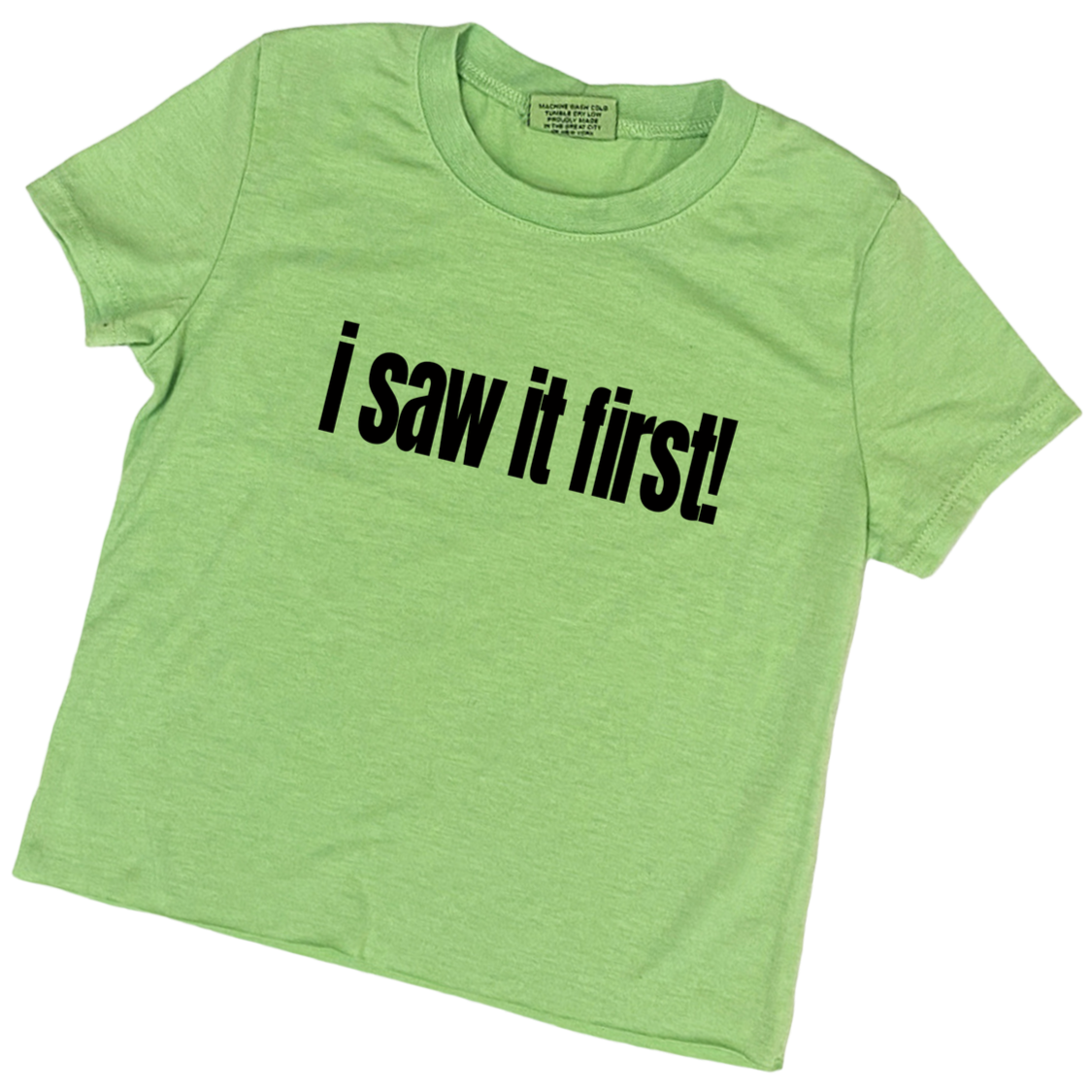
T-shirt Campaign: pre-launch, manufacturing a trend to build anticipation and curiosity
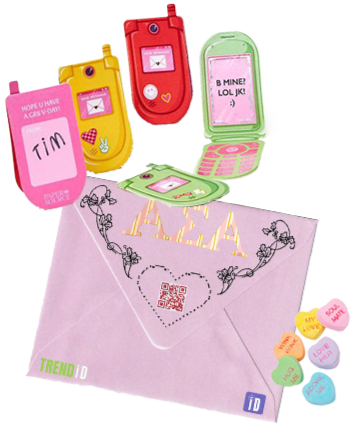
Valentine’s Day Candy Grams: collab with campus clubs & greek life, QR code provides link to app download & date night outfit inspiration
In order to develop in-depth campaign implementation plans and research related budget information, I used ClaudeAI. This was an incredibly helpful resource for empowering and fleshing out my ideas as we worked towards the deadline!
The Skills:
App Conceptualization
Marketing Campaign Development
Market & Consumer Analysis
Branding
Attention to detail
The Outcome:
Expanding the Possibilities
Before working on this project for my entrepreneurship class, I had never seriously considered the idea of starting my own business. However, exploring the development process and seeing my ideas take shape has opened my eyes to that possibility—and made me more excited about it than ever.
Product Developer’s Mindset
In class, we watched the TED Talk “The First Secret of Great Design” by Tony Fadell, which encouraged us to experience everyday interactions as if they’re new each time. This mindset helps developers notice details a typical user might overlook—especially the small frustrations our brains naturally learn to ignore.
Since starting this project, my group and I have noticed a significant shift in how we engage with digital content. We now pay close attention to user-experience details: where a program could be optimized, where bugs interfere with flow, and how certain design choices help or hinder the user.
One example that came up repeatedly in our portfolio class is the limited customization when placing content blocks in Squarespace. We also found it unnecessarily frustrating that adjusting the mobile layout automatically alters the desktop version. These minor but meaningful pain points were things I used to feel briefly annoyed by and move on—but now, I approach them with a problem-solving mindset, thinking critically about how they could be improved.