
The Original Sin
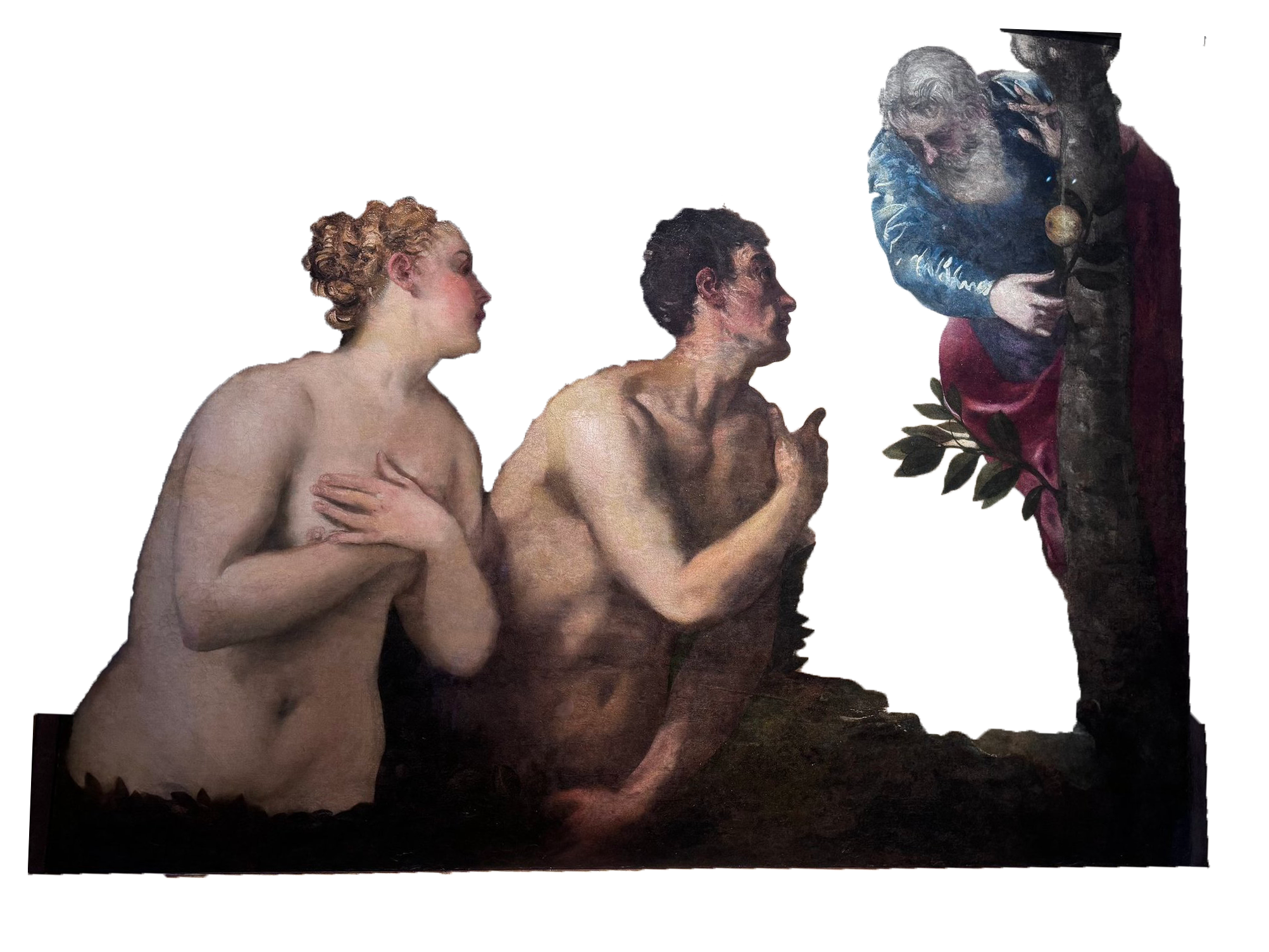
“The Temptation of Adam and Eve” by Robusti Jacopo (mid 1500s)
Adam & Eve After Becoming Aware of the Shame of their Nakedness
While in Europe, I documented every depiction of Adam and Eve I stumbled upon. What began as a passive fascination slowly became a way to make sense of my growing disconnection from my home country—a feeling sharpened by the political climate of early 2025, when women’s rights were facing significant setbacks. In the United States, a new presidential administration was rapidly rolling back reproductive protections, narrowing the legal definition of sex, and dismantling federal DEI initiatives. Abortion access, LGBTQ+ protections, and even the FDA’s approval authority were being challenged, while the Supreme Court signaled an openness to unequal treatment under the law. Abroad, global organizations warned of stalled progress and rising backlash against women’s rights almost everywhere.
Against this backdrop, I found myself thinking constantly about how society ended up existing within the patriarchy in the first place—my mind returning again and again to the concept of the “Original Sin.” If man’s fall from grace can be traced back to the first woman, then women are forever framed as inherently tainted by a sin Eve never knowingly committed.
Being an ocean away intensified everything. I felt both scared of losing rights as a woman and strangely removed from the political turmoil shaping my country. At the same time, I was taking a trend forecasting class, and in an attempt to make sense of this internal tension, I began developing a forecast—using myth, symbolism, and my own research to translate this fear, distance, and questioning into something structured, expressive, and forward-looking.
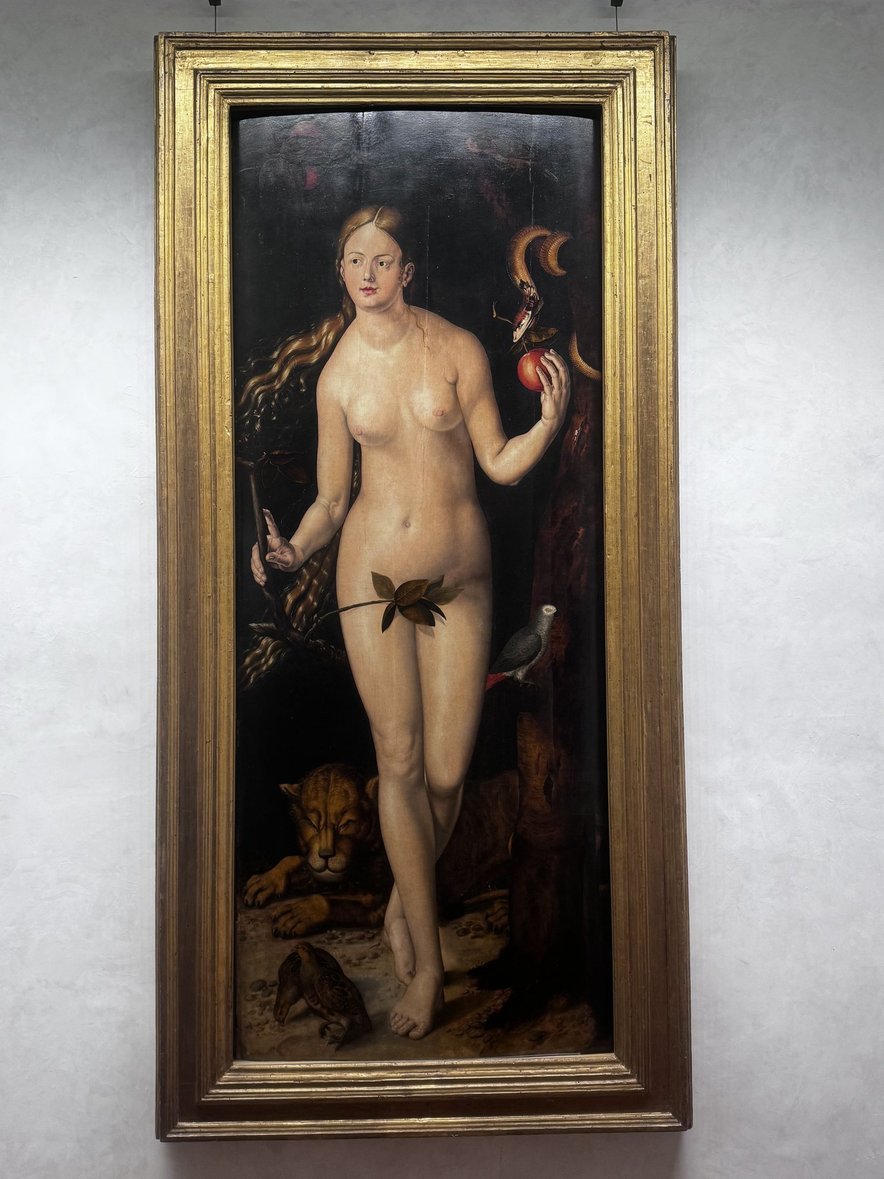
"Eve" by Albrecht Dürer in the Museo del Prado (1507)
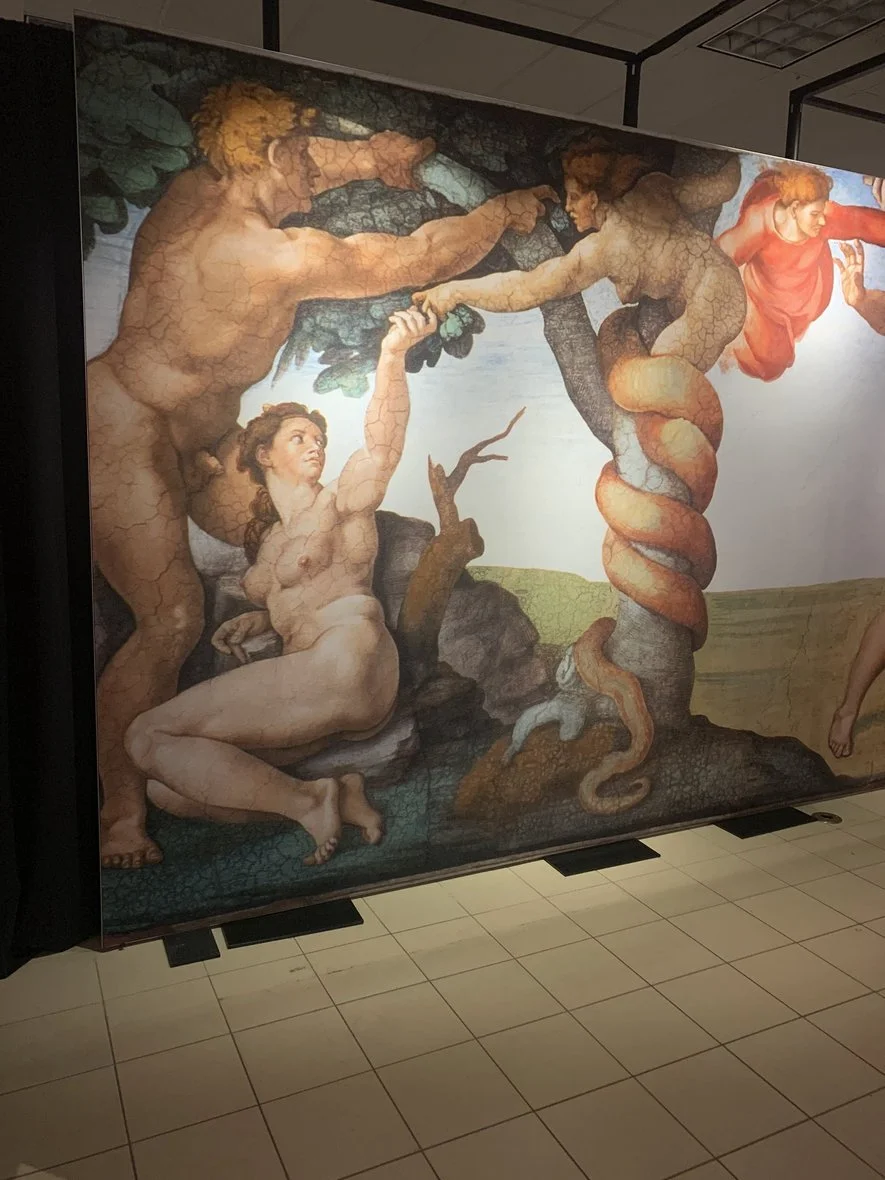
Image from Ceiling of the Sistine Chapel- “The Temptation of Adam and Eve” by Michelangelo Buonarroti (1512)
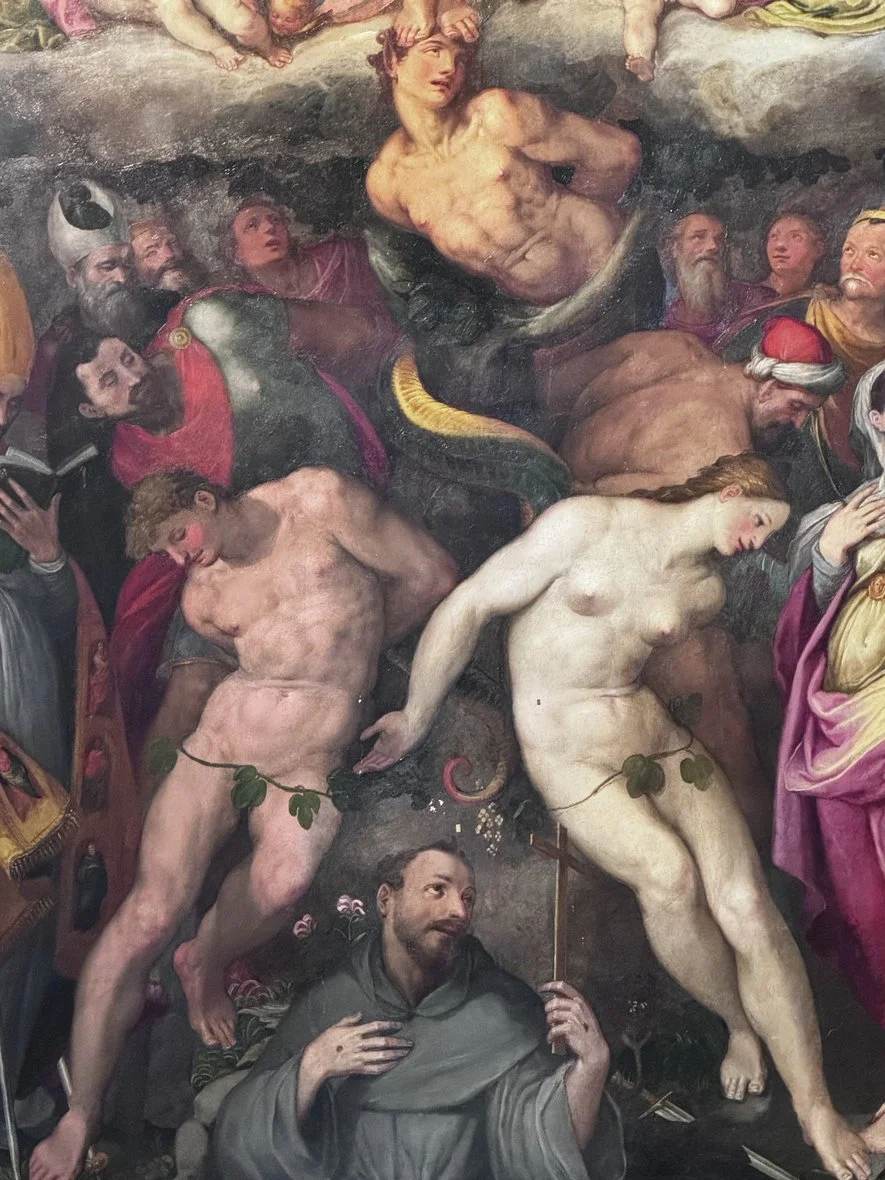
"Allegory of the Immaculate Conception" by Nicolò Cercignani detto il Pomarancio (1586)
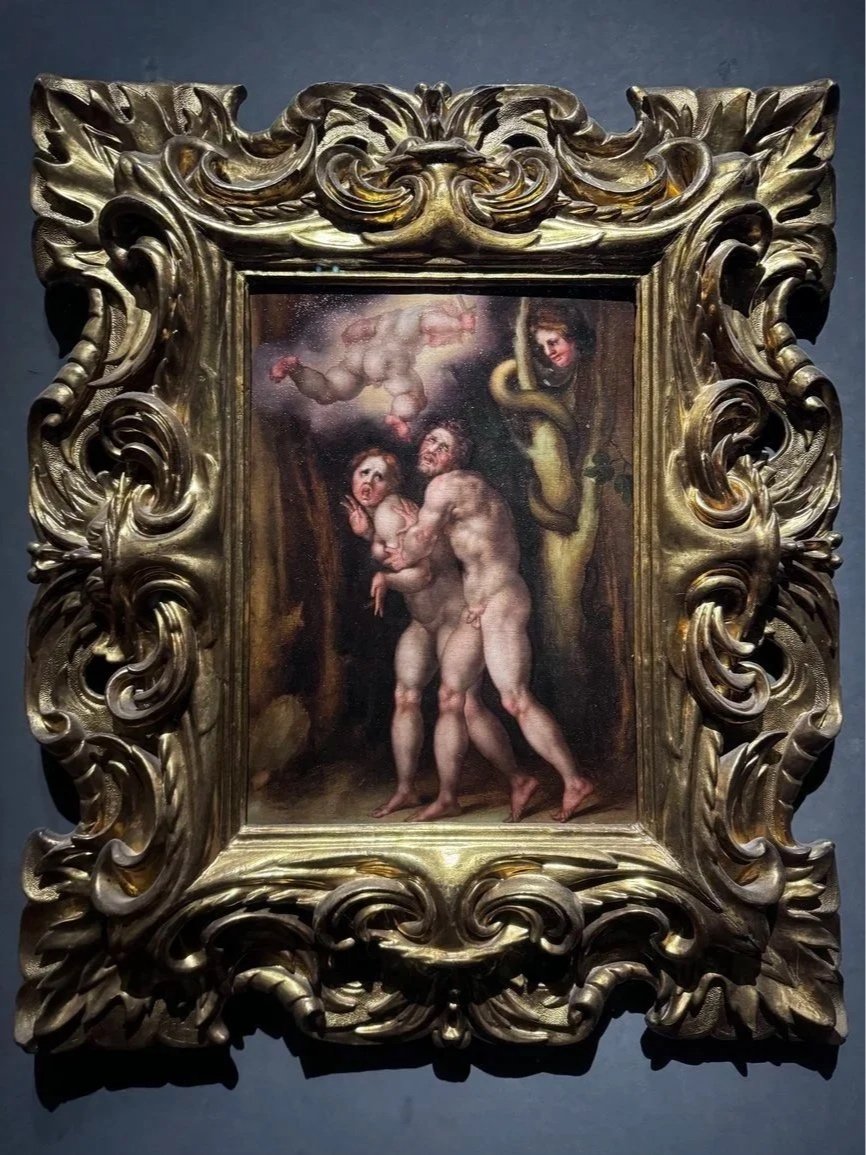
"Adam and Eve Expelled From Paradise" by Jacopo Robusti detto Tintoretto (1519)
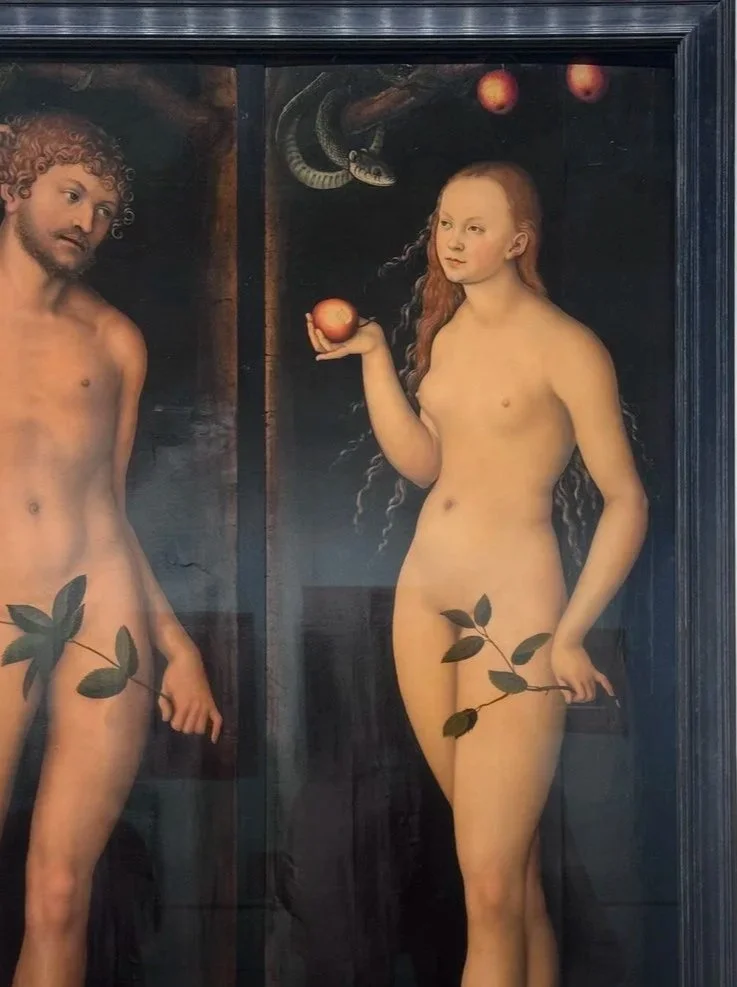
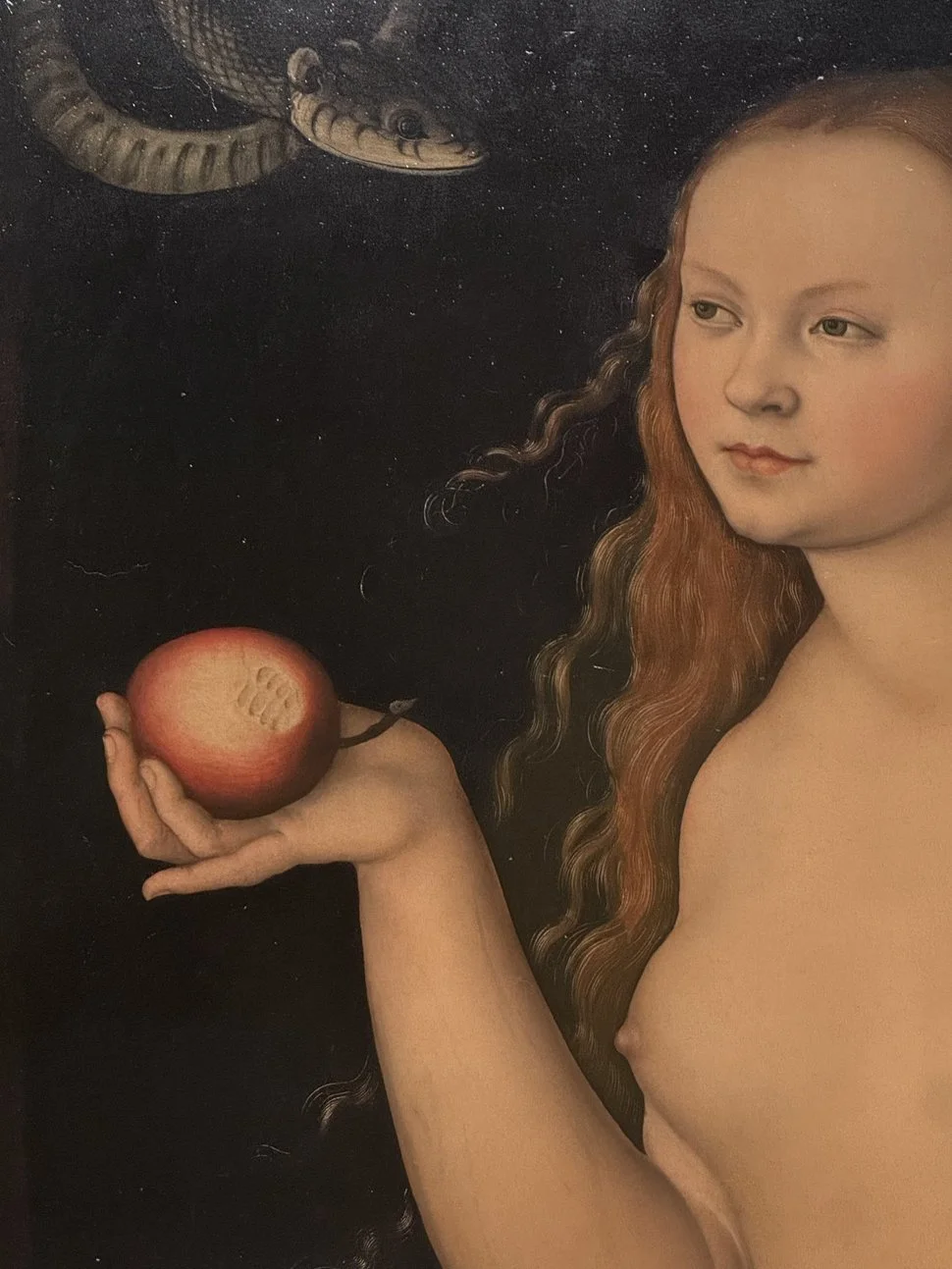
"Adam and Eve" by Lukas Cranach Il Vecchio (1528)
The Original Sin

-
The Original Sin: an homage to Eve while confronting the ways female autonomy is policed. By reworking the trope of women as the “temptation of men,” we reclaim sexuality as something powerful, intentional, and our own.
-
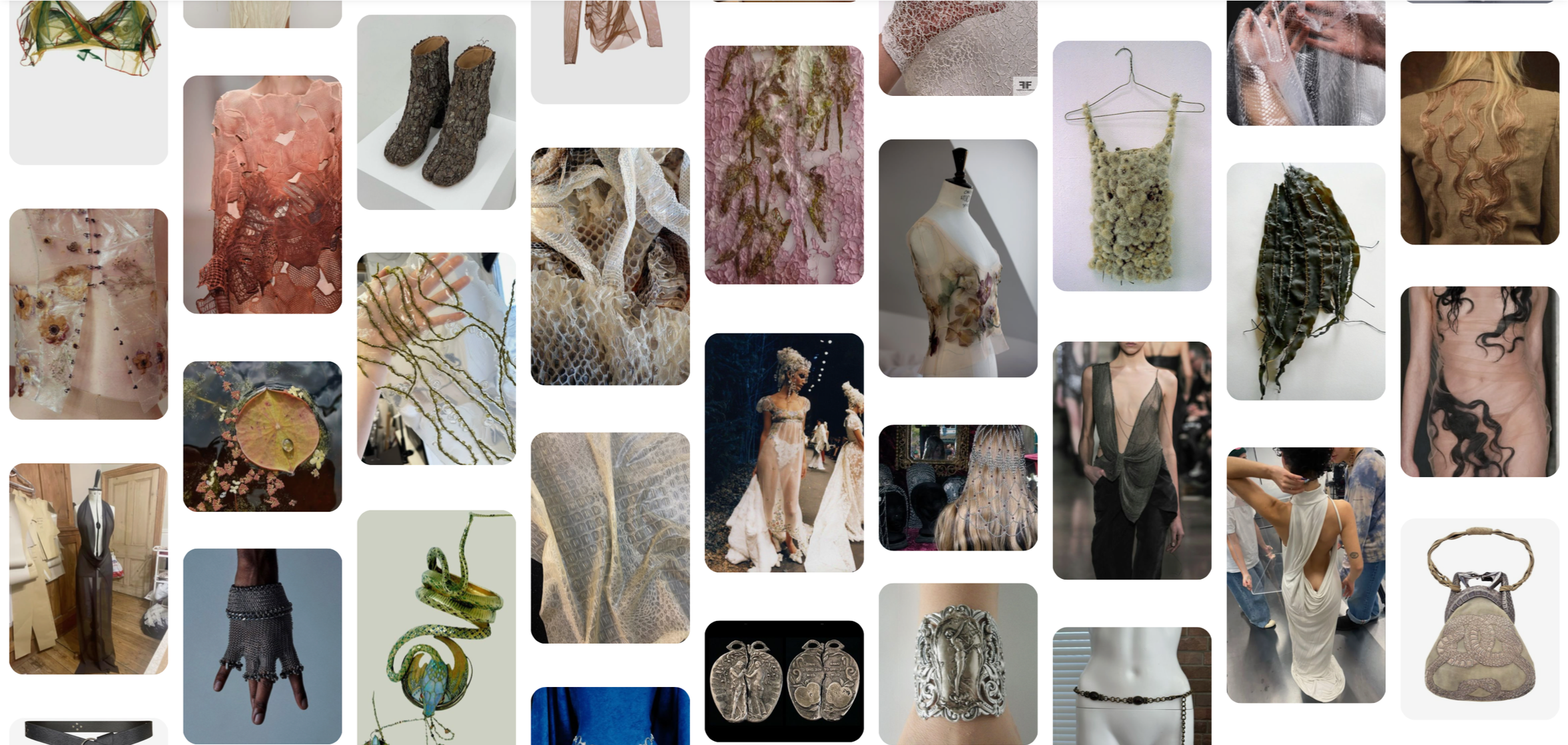
The Snake’s shedding skin
-Etruscan symbol of protection and fertility
The Apple
-Juicy, enticing, yet deadly (may be seen in beadwork and jewelry)
Forest elements
-Garden of Eden
Long, free flowing hair
Soft, sheer fabrics that allude to bare skin
-
Drawn from biblical imagery, the palette merges earthy naturalism with an alluring, moody intensity—primal, organic, and quietly charged.
-
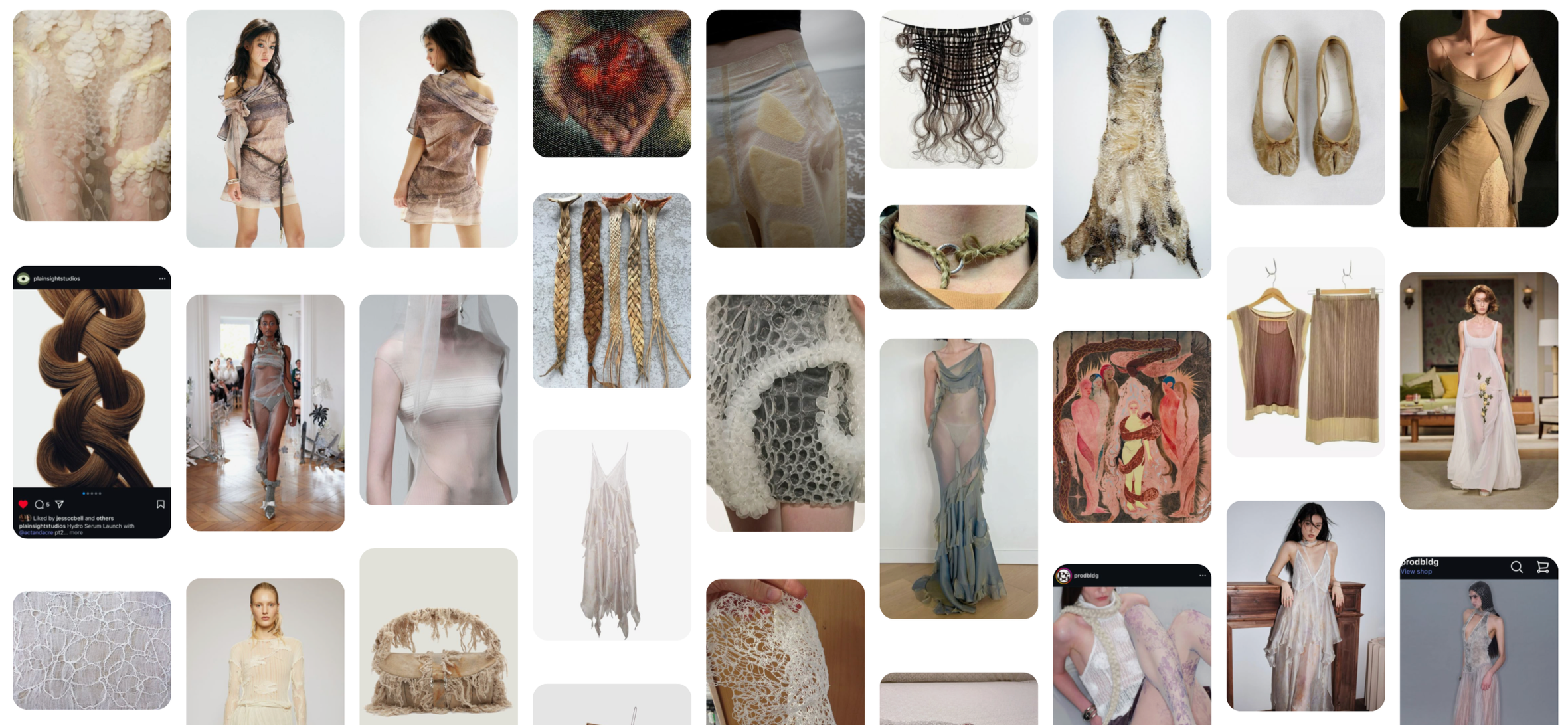
Snakeskin
Silk Chiffon
Crystal Organza
Gauze
Transparent Bioplastique
Lace
Tulle
-
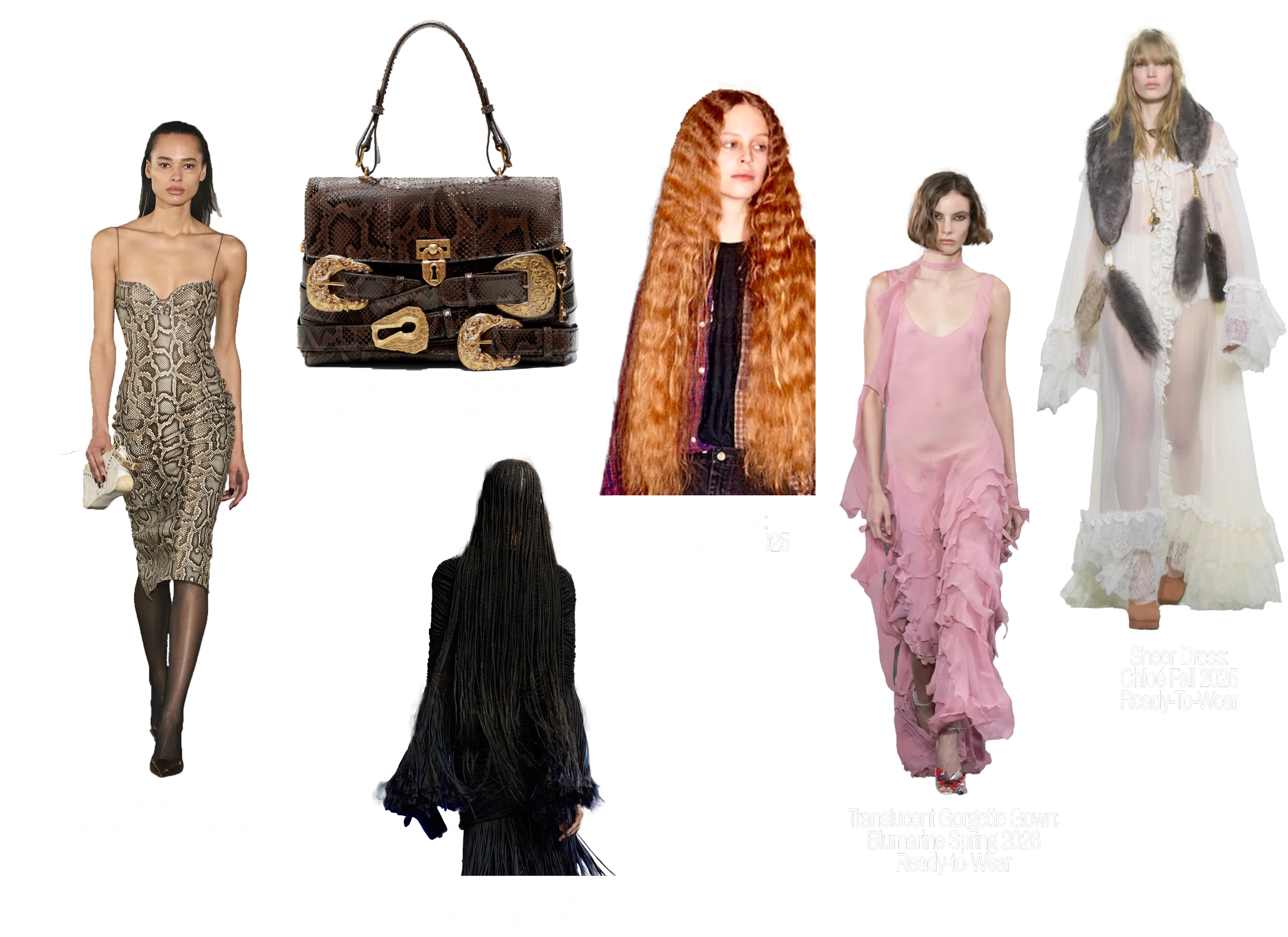
Designers, maisons, and labels that could successfully interpret this concept include:
I’m Seeing My predictions come true!
-
Snakeskin has been incredibly popular this year, being seen in runway collections from designers like Schiaparelli, Khaite, Miu Miu, & Ludovic de Saint Sernin.
It has also been covered as a must-see trend by several publications:
The Wall Street Journal’s “Snakeskin Is Trending in 2025: A Guide to Wearing the Pattern (Even if You’re Afraid of Snakes)” - May 16, 2025
Women’s Wear Daily’s “Snakeskin Shoes Are Trending: Here’s Who’s Wearing Them, Why They’re Hot Right Now and How to Style Them” - June 5, 2025
Marie Claire’s “Snake Print is Everywhere—Here’s How to Style It with Confidence” - October 3, 2025
While the correlation may have more to do with 2025 being the year of the snake according to Chinese astrology than the occupants of the Garden of Eden, I find the coincidence fascinating.
-
Long, undone hair has forever been associated with feminine freedom- however some relate its modern rise in popularity with the rise in “trad wife” aesthetics.
From features in Burberry and E.L.V. Denim runway shows to Mia Goth’s lustrous thigh-length hair in Guillermo del Toro’s 2025 “Frankenstein”, women are being seen wearing their hair like a Victorian maiden more and more.
-
Delicately Sheer Fabrications that just kiss the female form— romanticizing it rather than sexualizing— can be seen in this year’s collections. From Blumarine to Chloé, nudity is being portrayed with a sense of neutrality— the body simply as it was made.

“Non-virgin women are considered "unclean" because men see themselves as the thing that "dirties" a woman. That is why the “Madonna-Whore Complex” exists. When a man is sexually attracted to a woman he has "tainted" her and for that reason cannot respect her enough to marry/have kids with her. Men's attraction to women is partially what makes men hate women. Men see women as inferior so when a woman can elicit desire (and for that reason weakness) in a man he hates her for it. He hates that he desires a person beneath him. Men can not marry or have kids with someone they deems as beneath them. Hence the trend of men choosing more "palatable" women that they’re not actually attracted to.”
- Paris Mwendwa: Feminist essays on Substack