
Native American Boarding Schools: My Family’s Story & The Lasting Impact
STILL. I am Iroquois, Tuscarora, Bear Clan.
The Ask:
1
Research a family story of migration, backing it up with interview and scholarly sources.
My Focus:
How does forced assimilation affect one’s sense of identity?
2
What intergenerational effects resulted from Indian boarding school policies, and how can descendants heal collective trauma and restore lost cultural traditions?
Project Specs:
160+
Minutes of interview recorded with family members, discussing genealogical research and personal experience.
2
Overarching questions answered through deep historical research, emotional conversations, and big picture analysis.
13
Pages of compiled findings, attempting to address and better understand the complexity and generational impact of Native American boarding schools.
What Were American Indian Boarding Schools?
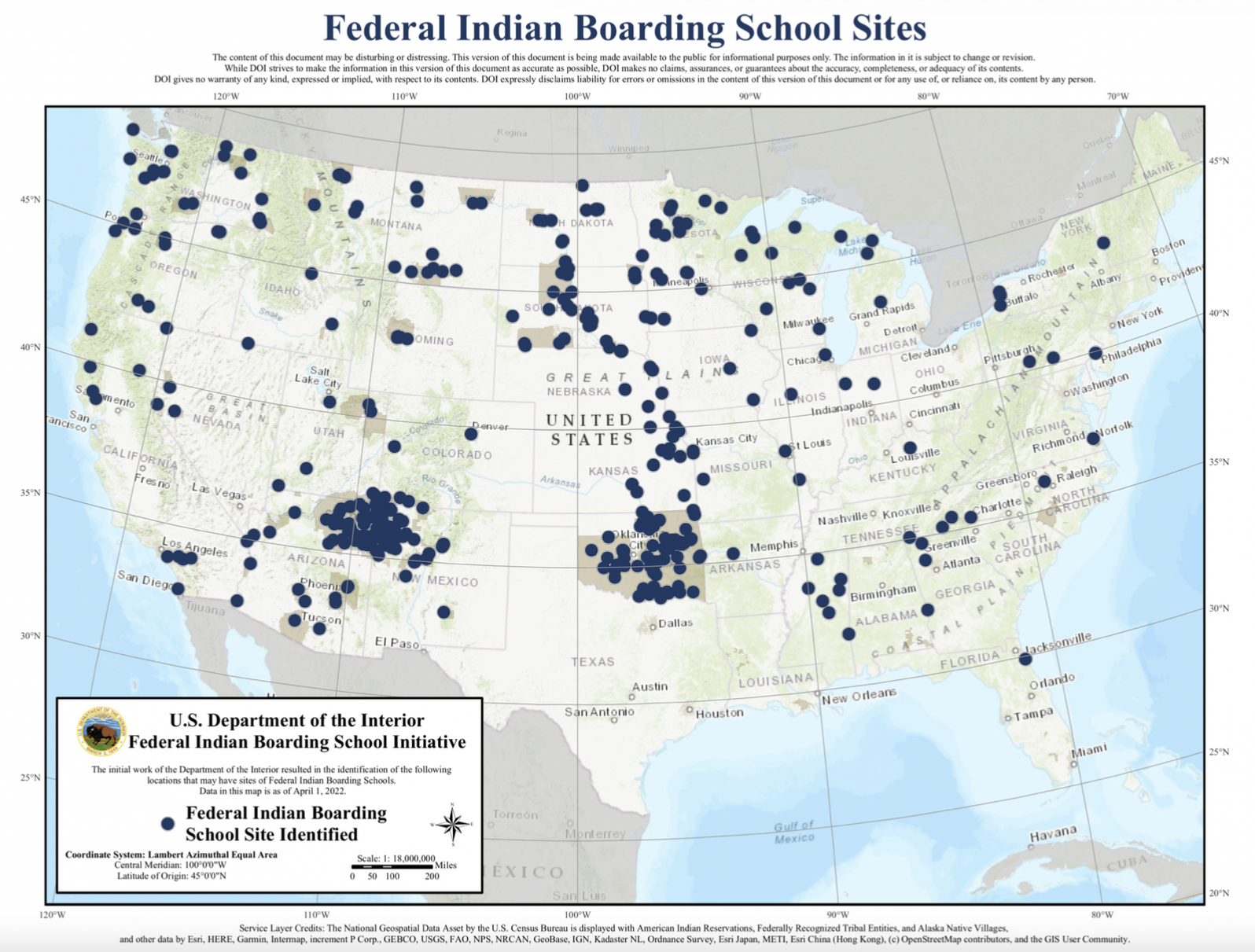
Throughout the 18th and 19th centuries, the United States opened over 350 government-funded boarding schools to serve two purposes: to educate and set Native children up for "success," but also to “Kill the Indian, save the Man”.
Native American children were moved away from their homes in order to be forcibly rid of their heritage and become “Americanized”. This part of our country’s history is largely underrepresented in textbooks and media coverage, and it is now more than one-hundred years after the boarding school era that many of these children's stories are finally being heard.
Through this project, I hoped to both share my family’s story, and raise awareness about the atrocities faced by American Indian people throughout our country’s history.
The Process .𖥔 ݁ ˖
The Process .𖥔 ݁ ˖
The Challenge:
This project felt deeply personal—perhaps too personal. I struggled with the pressure to do justice to a topic so close to my family's history. The hardest part wasn't finding sources; it was deciding what not to include. I went through multiple rounds of cutting content to refocus on my core research questions.
My Research Approach:
My initial approach—finding scholarly sources before interviews—didn't work. I reversed course: conducted interviews first, drafted rough answers to my research questions, then identified gaps that needed statistics or additional perspectives.
My research system was messy but effective: multiple Google documents organizing quotes and findings by theme.
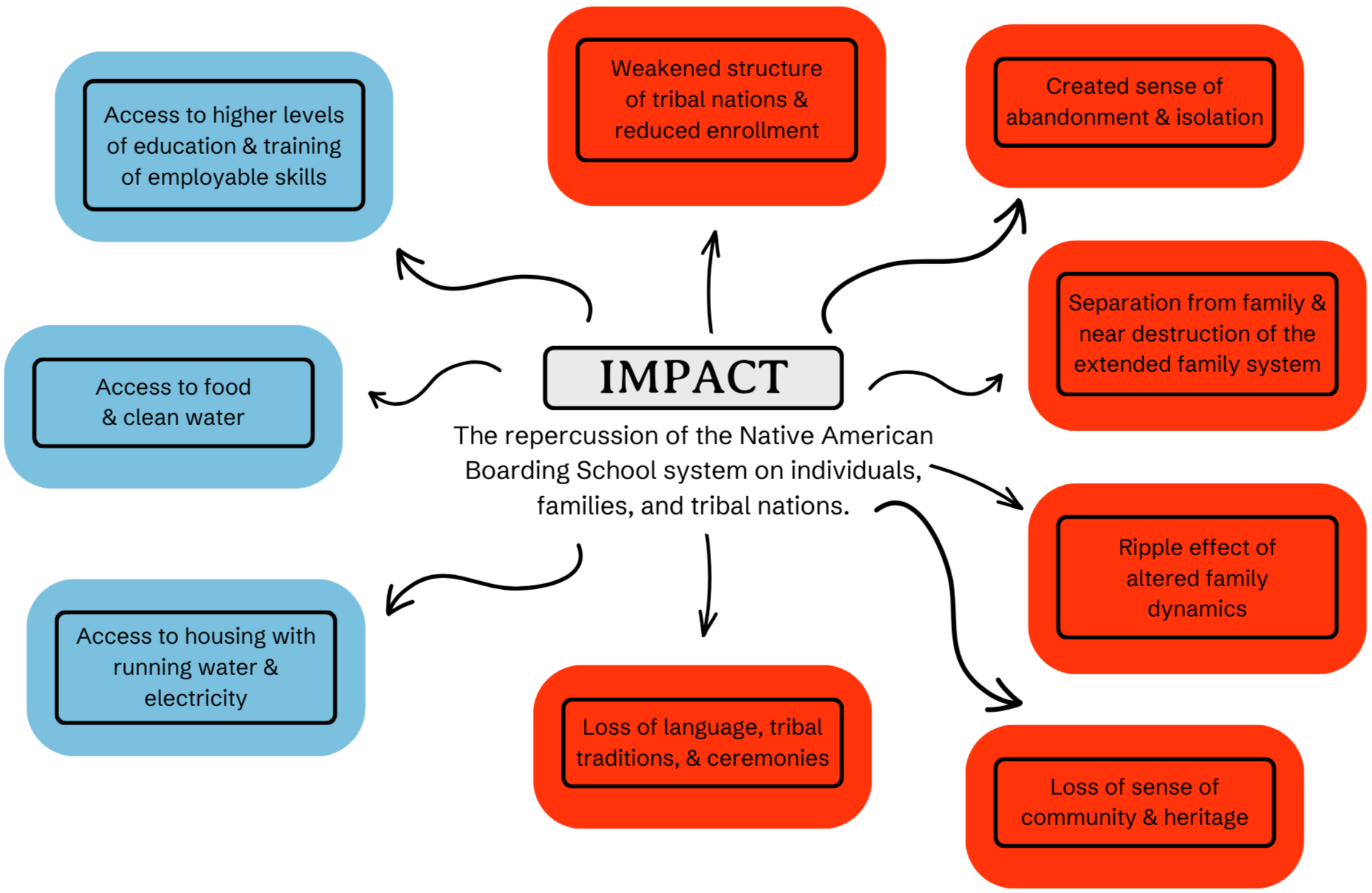
A breakthrough came when I created a pros/cons graphic organizer to capture the complexity—showing how boarding schools were simultaneously sites of cultural harm and community resilience, because there was no singular Native American experience.
The Interviews:
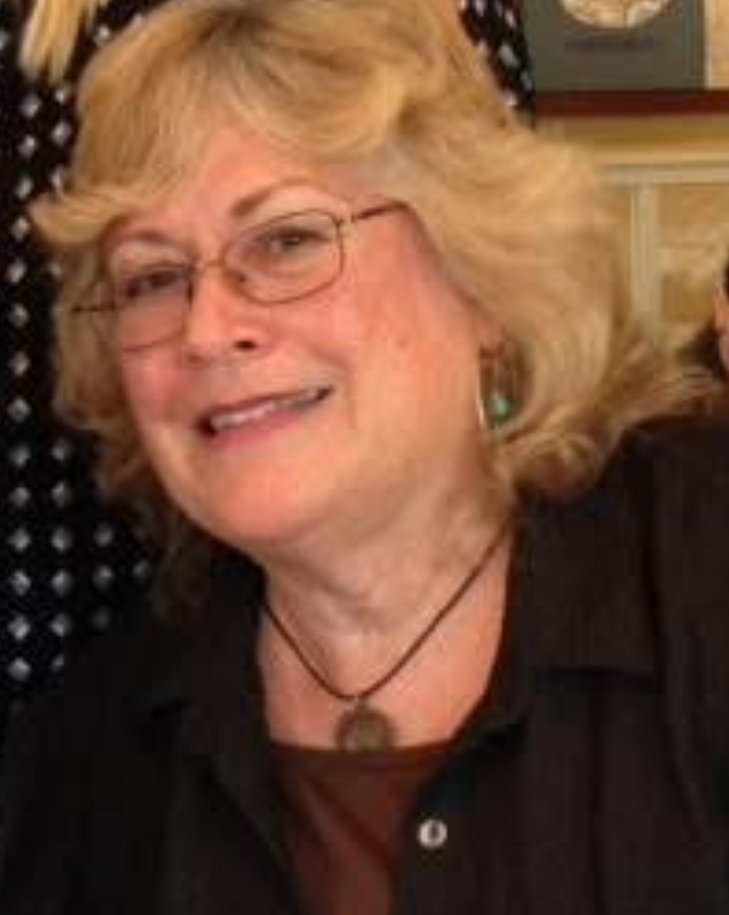
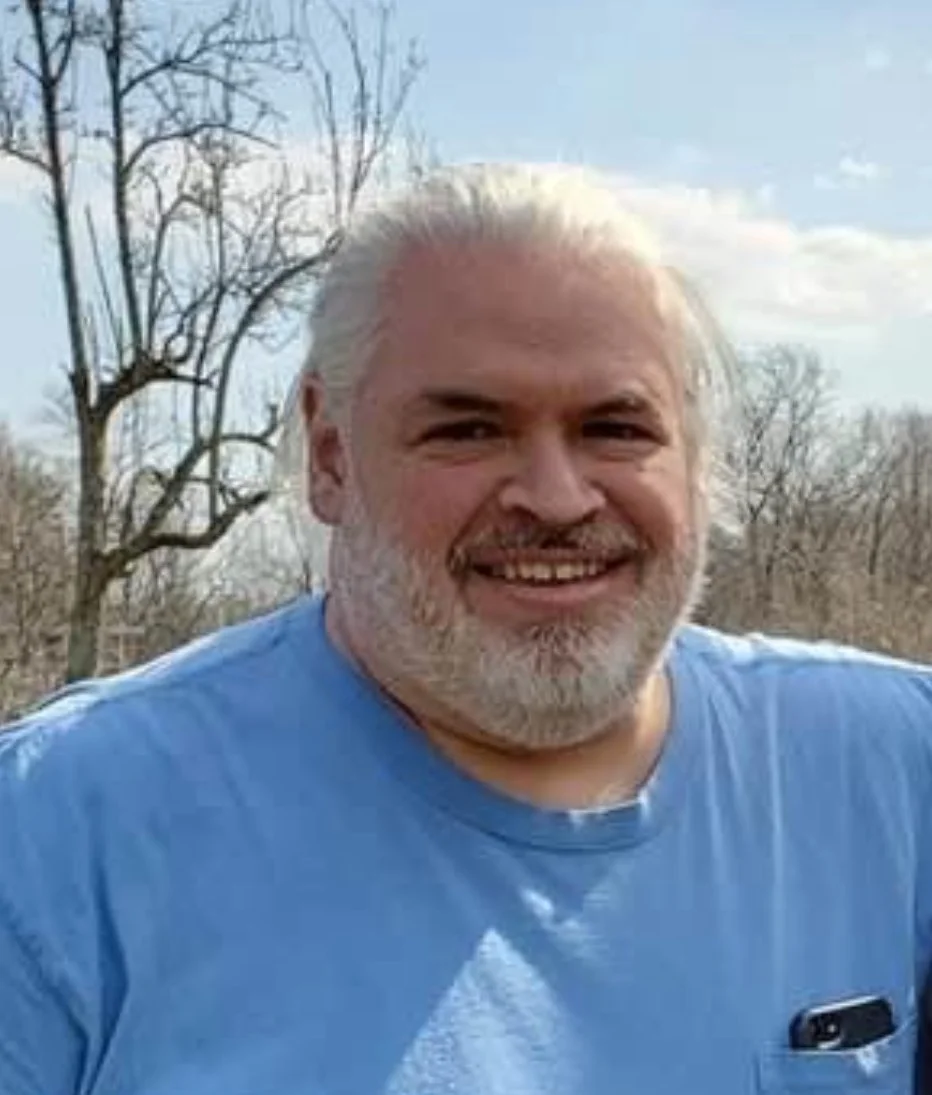
I chose to conduct interviews with my grandmother, whose mother and grandmother had attended Indian boarding schools, as well as my uncle (her son), a lawyer specializing in Native American law.
“really, they didn't consider the people from the reservations as civilized. so it was to ‘Christianize’ and ‘Westernize’ and ‘civilize’ the people starting with their children.”
“I think that in those instances, those operators of boarding schools, Indian boarding schools, felt that Indian language, Indian culture, Indian religion, were all things that were impediments to the success of an Indian.”
-
My Grandmother on my father’s side She is half Native American: Iroquois, Tuscarora, Bear Clan.
-
My Uncle, my father’s brother He is a quarter Native American & enrolled in the Tuscarora tribe.
The Skills:
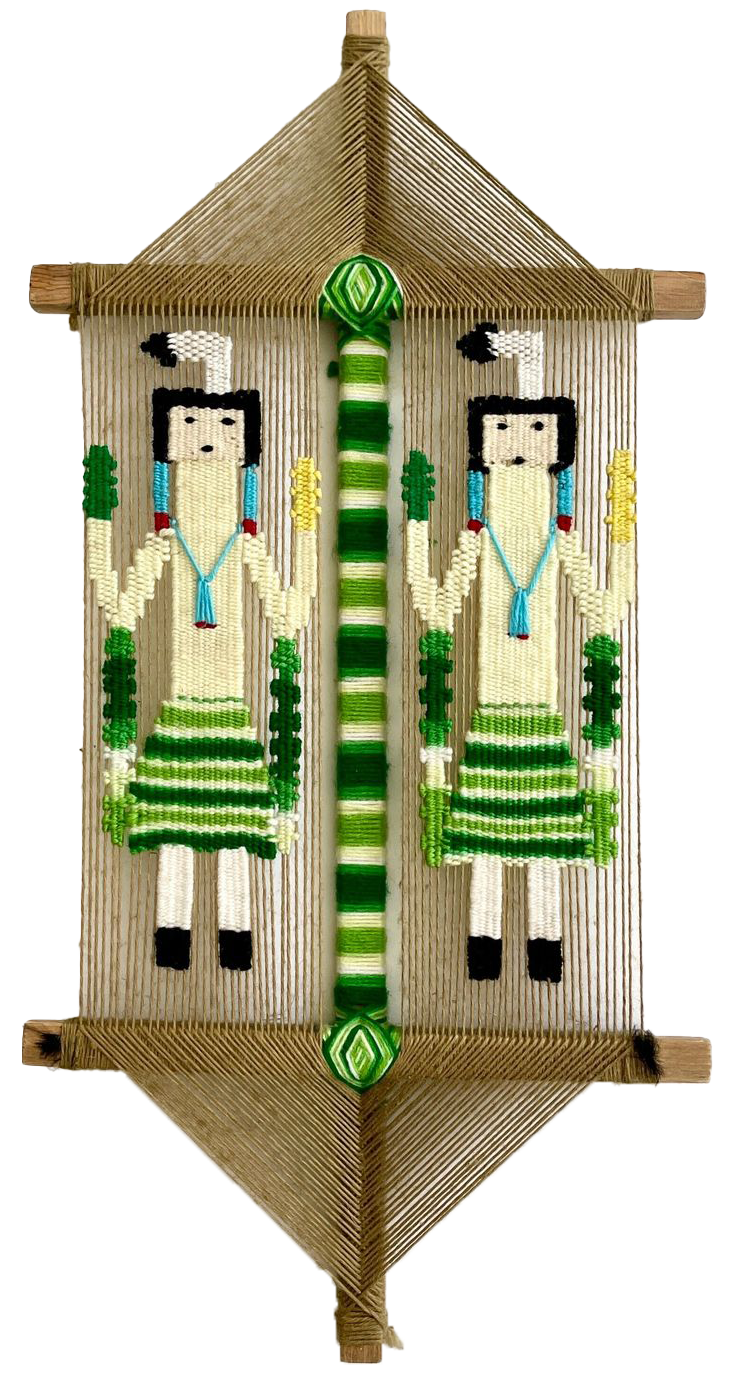
Storytelling
Research
Analysis
Vintage Navajo Yei Weaving

Interviewing
Connection
The Outcome:
This project taught me how to be productively curious, how to write with sharper analytical focus, and how meaningful research can shape personal understanding.
I’m especially thankful for the opportunity to explore my family’s history and to have conversations that helped me understand our story with greater clarity.
I hope to continue carving out time to connect with my Native side in an intentional, sustained way.
Interested in learning more?
Use your voice and dollars to get more Native American People into political offices and onto school boards so that we can ensure that nothing of this nature happens again, aid in reteaching lost culture, and impove the quality of life on reservations.
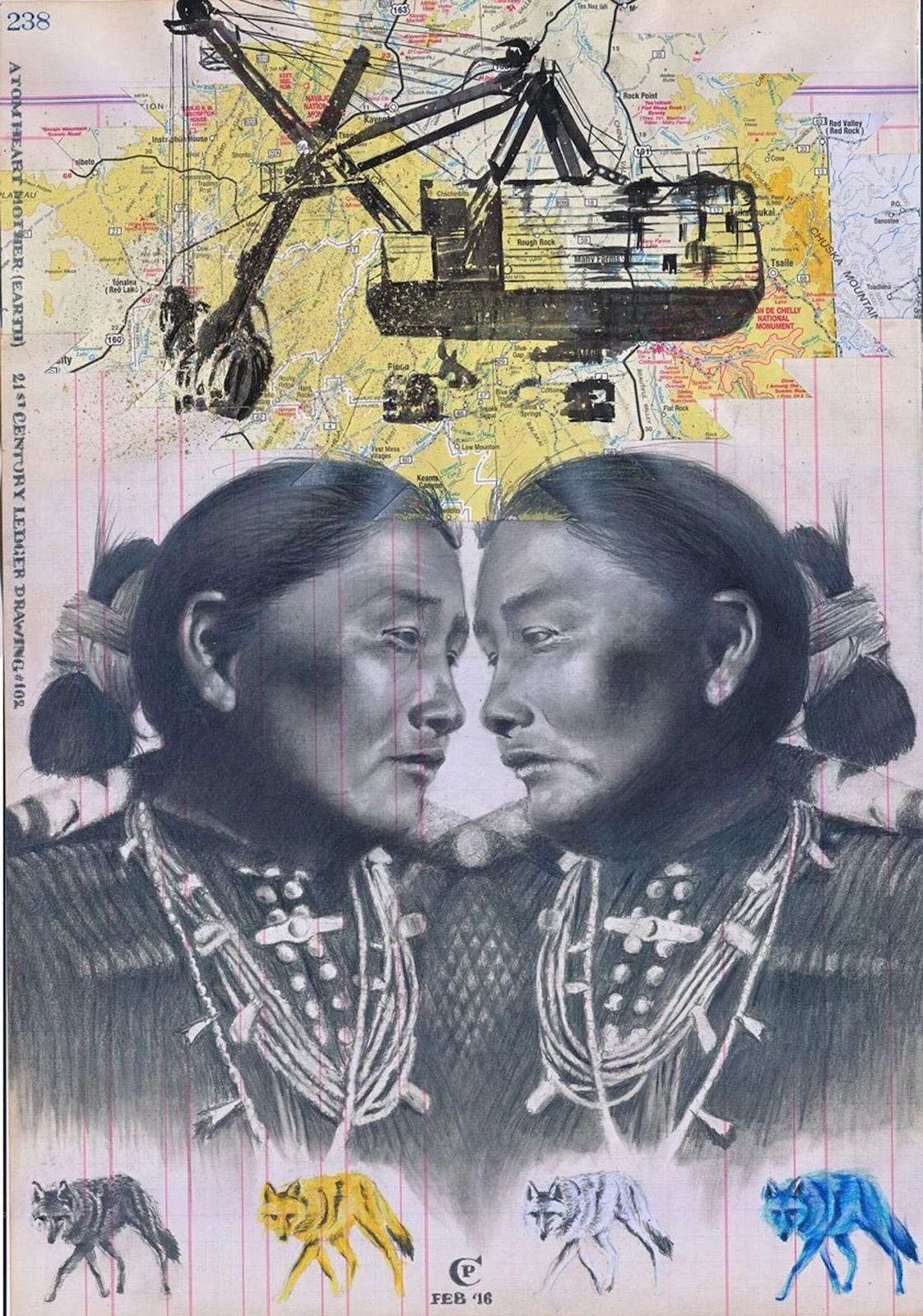
Chris Pappan (Kanza/Lakota), Atom Heart Mother (Earth), 2016
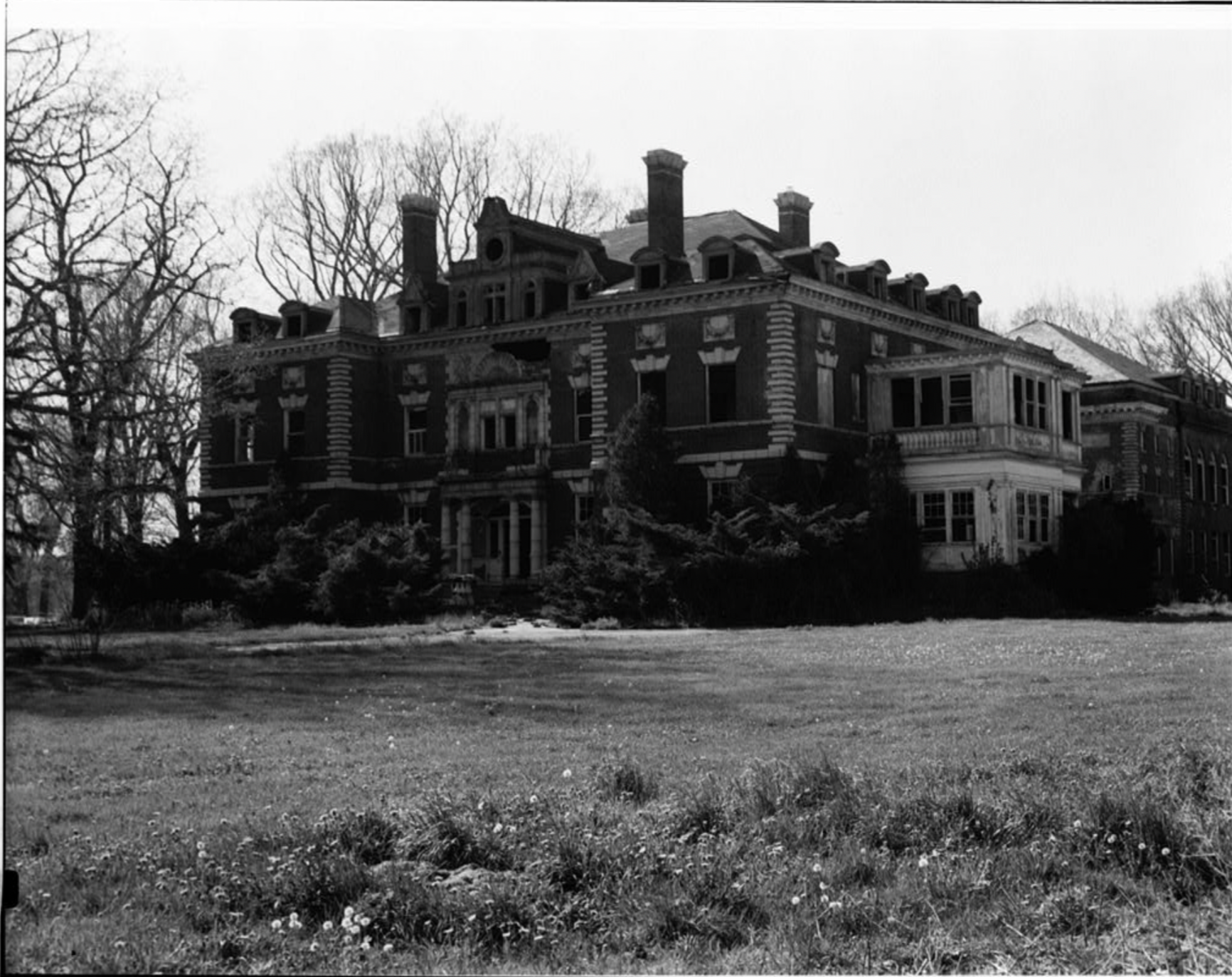
Thomas Indian School (Erie County, New York): attended by my family members
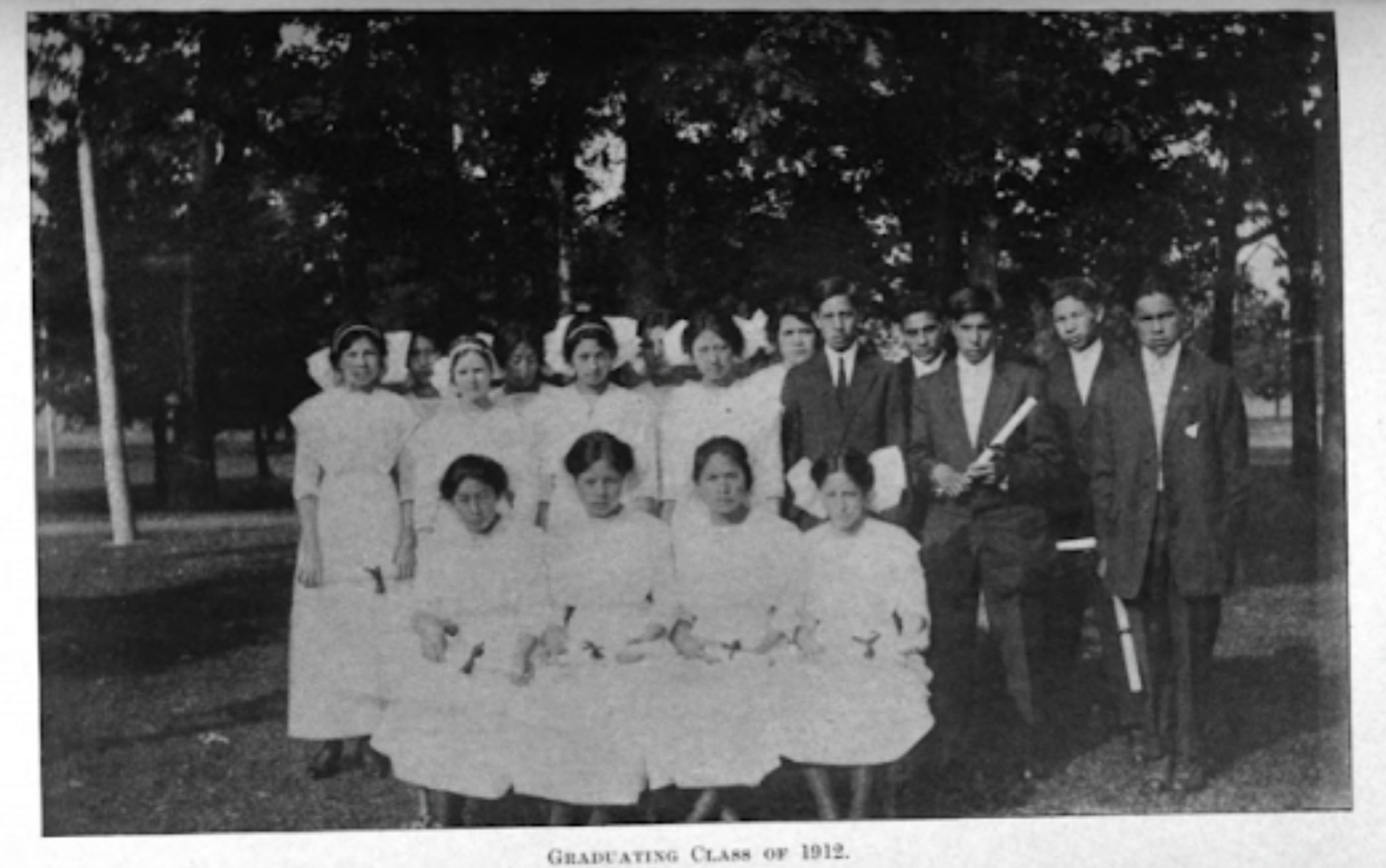
Thomas Indian School graduating class of 1912, including my relative Melissa Anderson

My relatives' journey from reservation to Indian School: one example of the great distances these individuals traveled from home